
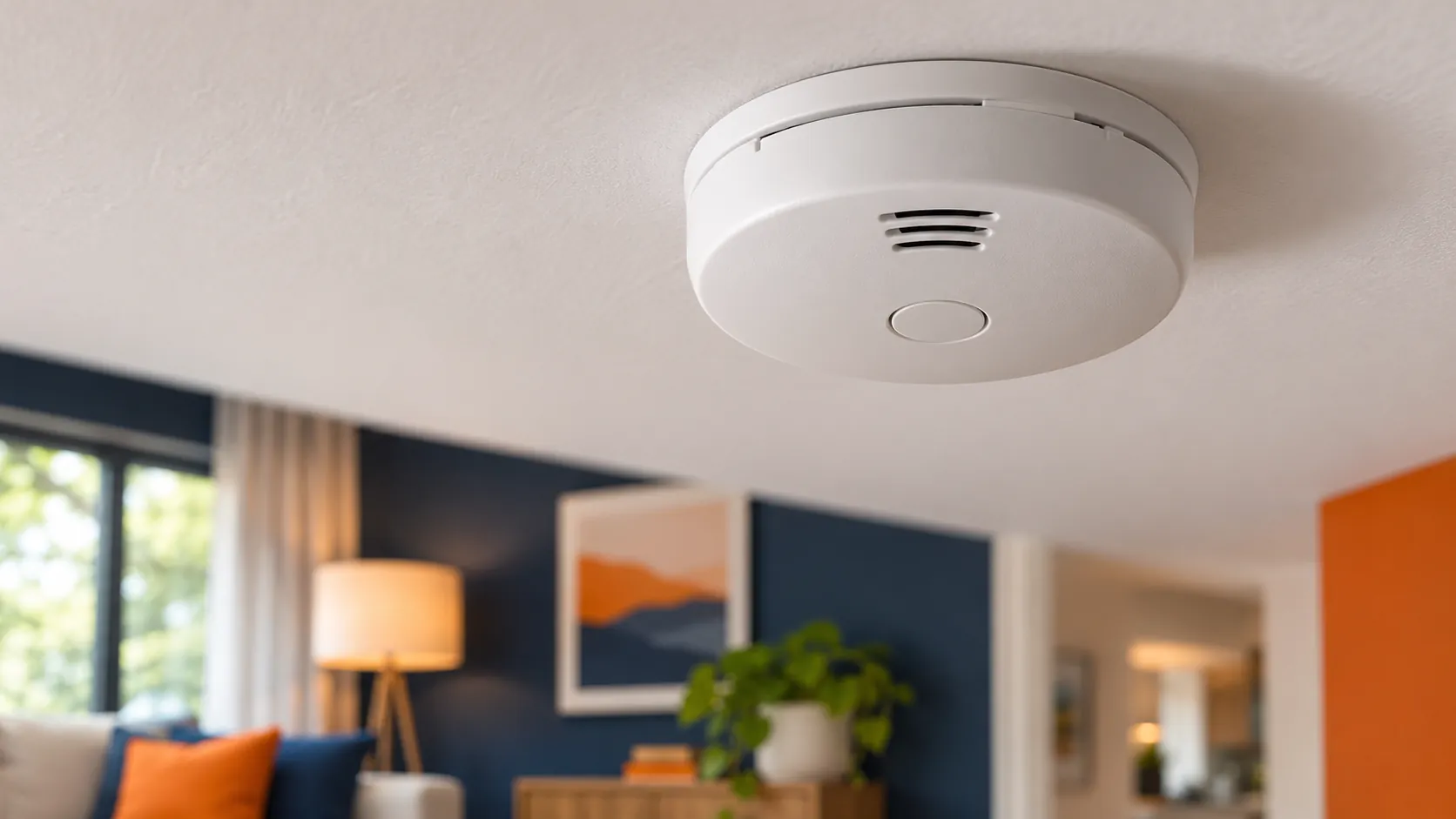
A smoke detector may beep for several reasons. It may warn of danger, have a low battery, be too old or have a fault. Treat any possible fire or carbon monoxide warning as an emergency. Carbon monoxide (CO) is a dangerous gas you cannot see or smell. If you suspect fire or CO, get outside. Call emergency services from a safe place and stay outside.
If there is no sign of danger and the device gives a short chirp, check the manual for the exact model. A chirp is a short sound that may repeat. The sound pattern and the right fix can differ by alarm. Do not remove the battery and leave the alarm disabled.
A quick path: what should I do now?
- Respond to danger first. If the alarm warns of fire or carbon monoxide, or you suspect either, leave and call emergency services from outside. Do not wait to look up a model number.
- Find the source when it is safe. Is it a smoke-only alarm, a combined smoke and carbon monoxide alarm, or a building fire-alarm panel? A different nearby device may be making the sound.
- Read the model’s signal chart. Find the brand and model on the unit or in its manual. Note the sound pattern and any flashing light. Do not guess the cause from timing alone.
- Take the model-specific action. If its manual identifies a low-battery warning, follow the instructions for that alarm’s power type. If it signals a fault or end of life, follow the replacement or service instructions.
- Check that protection is working. Test as the manufacturer directs. If you cannot resolve a fault, get qualified help and arrange working protection promptly.
In a connected set of alarms, more than one unit can sound. The manual may explain how to find the unit that started the warning. If the source remains unclear, ask the manufacturer or the building’s alarm service provider.
Common reasons for a chirp
| Possible cause | What to check |
|---|---|
| Low or missing battery | Find out whether the model has a user-replaceable battery and follow its manual. |
| End of life | Check the manufacture date and the maker’s replacement instructions. |
| Device fault | Read the model’s sound and light codes. Contact the maker if the warning continues. |
| Dirt or installation issue | Follow the maker’s cleaning and setup instructions; do not open or alter parts without guidance. |
These are possibilities, not a way to diagnose every sound. A chirp does not rule out another danger.
How do I read a beep or chirp?
A chirp is a short sound. An alarm signal is a warning. The National Fire Protection Association (NFPA) gives these examples: three loud beeps that repeat may warn of smoke. Four loud beeps that repeat may warn of carbon monoxide. A single chirp every 30 or 60 seconds can mean a low battery on some devices. These examples do not replace your model’s signal chart. The sounds for a fault, low battery or end of life can differ.
If you cannot tell what the signal means or you suspect danger, do not stay inside to troubleshoot. Once it is safe, use the model number and the maker’s manual to check the sound and light pattern. NFPA: Learn the Sounds of Fire Safety
Two examples: what to check next
These examples show how to use the manual; they do not identify a real alarm from its sound alone.
- One short chirp keeps returning: When it is safe, locate the unit and match its sound and light to the manual. If the manual says low battery, follow the instructions for that model’s power type. A sealed-battery alarm may need to be replaced as a whole.
- A chirp returns after a new battery: Check that the battery is approved for the model, is installed correctly and that the compartment is closed. If the manual identifies an end-of-life or fault signal, follow its service or replacement instructions. If the signal remains unclear, get help and arrange working protection.
A building fire-alarm panel or a connected set can behave differently. Contact the building’s alarm service provider if you cannot identify the source.

Check the battery type before replacing it
Some alarms use a replaceable battery. Others have a sealed long-life battery; for those, the whole alarm is replaced according to its instructions. A hardwired alarm is connected to the building’s power. It may also have a backup battery. Setups vary. Ask a qualified person for help with electrical connections. U.S. Fire Administration: Smoke Alarms
Our battery replacement guide explains what to check before you begin. The way an alarm senses smoke is a separate feature from its battery. Learn about photoelectric and ionization smoke alarms. If the alarm keeps chirping, follow the manual or contact the maker. Do not assume a reset has fixed the cause.
What if the sound continues after a battery change?
Start with the manual, not a second guess. Check the following only when it is safe and your model permits it:
- Battery and compartment: Is the battery type correct, installed in the right direction and the compartment fully closed?
- Another unit: Is the sound coming from a different alarm or from a connected system? Check the model’s instructions or ask the system provider.
- Fault or end of life: Does the label or manual say the pattern means the unit needs service or replacement?
- Cleaning: Does the manufacturer explain how to remove dust safely? Do not spray chemicals into the alarm or take it apart.
If the unit is faulty, fails a test or the signal remains unclear, ask the manufacturer or a qualified service provider. A temporary silence feature does not fix a low battery, an old unit or a fault. Keep working protection in place.
Check the age and test the alarm
The U.S. Fire Administration recommends replacing home smoke alarms 10 years after the manufacture date. The maker’s instructions, an end-of-life signal or local rules may require earlier replacement. Test alarms monthly and follow the exact model’s instructions. If an alarm does not work as directed, restore working protection promptly. USFA maintenance guidance
What if cooking steam sets off the alarm?
If you are unsure whether there is a fire, leave and call emergency services. Once you know there is no danger, follow the manual and local guidance. The U.S. Fire Administration (USFA) says you can use the hush button, if the alarm has one, once you are sure the alarm was triggered without a fire. Never remove the battery to avoid cooking alarms. If alarms trigger repeatedly near a kitchen or bathroom, ask a qualified installer or local fire authority to review the location and device instructions. USFA: Smoke Alarms
A checklist for distributors and property buyers
A useful product file helps customers resolve problems without guessing:
- Exact model number and manual.
- Battery type and whether users can replace it.
- Fire alarm, low-battery, fault and end-of-life signals for that model.
- Test and replacement instructions, in the required language.
- The relevant product markings and documents for the destination market.
Confirm these details for each model and batch. Do not copy a sound chart from a similar-looking alarm.
Frequently asked questions
Can I take the battery out to stop the noise?
Do not leave the alarm without its required power. A disabled alarm cannot provide its intended warning. Replace the battery or the unit as directed, and make sure working protection is restored.
What if I cannot find the model number or date?
Check the manual, label and manufacturer’s guidance when it is safe to do so. If you still cannot identify the unit or its age, ask the manufacturer or your local fire department’s non-emergency service. Do not assume an unknown or faulty alarm is working.
How often should I test a smoke alarm?
USFA recommends testing home smoke alarms monthly. Also follow the manufacturer’s directions and local rules.
For product or bulk supply questions, see our smoke alarm page. Confirm the power source, manual and certification for the exact model before ordering.