
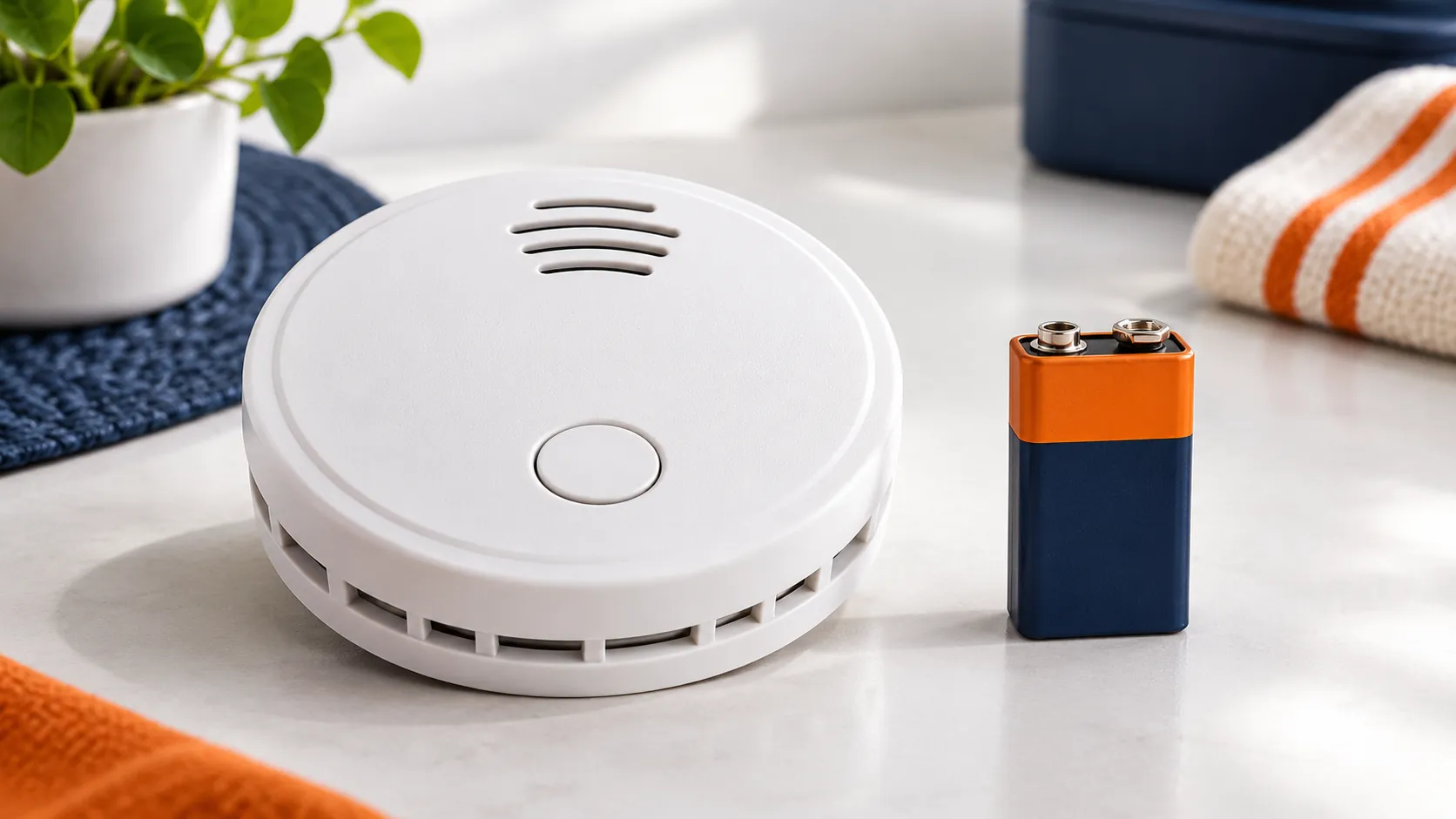
To change a smoke detector battery, first confirm that your model has a user-replaceable battery. Find the model’s manual, use the battery it specifies, follow its steps, then test the alarm. Some alarms have a sealed battery that is not designed to be replaced; those may require a new alarm instead.
If the alarm warns of fire or carbon monoxide, leave the building. Also leave if you suspect danger. Carbon monoxide (CO) is a dangerous gas you cannot see or smell. Call emergency services from a safe place. Do not change a battery during an emergency.
Before you start: four checks
- Is it safe? If a fire or carbon monoxide warning is sounding, or you suspect danger, leave and call emergency services from outside.
- Which unit is chirping? In a connected system, the source may not be the unit you first notice. Follow the model or system instructions.
- Can you reach it safely? Do not balance on furniture or stretch past your reach. Ask for help if needed.
- Do you have the right manual? Find the brand and model. Battery doors, replacement steps and sound codes can differ.
If you cannot safely identify or reach the device, ask the manufacturer, a qualified service provider or your local fire department’s non-emergency line for guidance.
1. Identify the power source
Look for the model number on the alarm or in its manual, when it is safe to do so. Use it to find the manufacturer’s instructions. If you rent, ask your landlord for help when needed. In a managed building, contact the building manager.
| What the manual says | What it means for the battery |
|---|---|
| User-replaceable battery | Use the specified battery and follow the model’s steps. |
| Sealed or nonreplaceable battery | Do not open the battery. Follow the maker’s instructions for replacing the entire unit. |
| Hardwired, with backup battery | The alarm is connected to building power. Some have a backup battery you can replace. Check the manual. |
| Building fire-alarm system | Contact the building’s service provider. A system device may not be maintained like a standalone home alarm. |
The U.S. Fire Administration describes these common power arrangements. A battery drawer is a clue, but the manual—not appearance alone—determines what the user may replace. The sensing method does not tell you what battery an alarm uses. See how photoelectric and ionization alarms compare. Never disconnect wiring unless an appropriately qualified person is following the applicable instructions.

2. Gather the right battery and instructions
Use the battery type listed in the manual. Check for any approved battery brands or models too. A battery with the right shape is not necessarily approved. Some alarms use a 9-volt battery, while others use different batteries; do not assume a rechargeable battery is suitable. The battery pictured in this article is an illustration, not a recommendation for your unit.
Before buying a battery, check the manufacture date on the unit when safely accessible. USFA recommends replacing home smoke alarms 10 years after manufacture; the maker or local rules may require earlier replacement. If the alarm is due for replacement, a new battery will not make the old alarm new again. Ask the manufacturer or building manager if the model or date is unreadable.
3. Replace the battery as the manual directs
For a model with a user-replaceable battery:
- Open the battery compartment using the method in the manual. Some alarms have a drawer; others are different.
- Remove the old battery and insert the specified new battery in the direction shown by the device.
- Close the compartment fully. If the manual requires the alarm to be refitted to its base, follow those instructions.
- Use the test button as directed in the manual. Confirm that the alarm responds as the manual says it should.
- Dispose of the old battery according to local rules.
The precise steps above do not override the product manual. If there is exposed wiring, damage or uncertainty, stop and get qualified help. Never leave the alarm disconnected or without its required power.
After replacement: check the alarm, not just the noise
A silent alarm is not proof that it works. Once the battery door is closed and the unit is back in place as the manual requires, press the test button as directed. The manual tells you what response to expect. If the unit fails the test, has a warning light or keeps chirping, check the manual. Follow its fault instructions and arrange working protection promptly.
Do not test an alarm by making a fire or filling the room with smoke. Use the test method described for that product. USFA recommends testing home smoke alarms monthly. USFA maintenance guidance
4. What if it keeps chirping?
Check the sound pattern and light codes in the model manual. A chirp is a short sound that may repeat. It may mean a low battery, a fault or the end of the alarm’s life. If the warning continues, contact the maker or a qualified service provider. Our chirping guide explains how to approach the problem.
USFA generally recommends replacing home smoke alarms 10 years from manufacture. Follow any earlier replacement date or end-of-life instruction for your model and applicable local rules.
For distributors and bulk buyers
When you compare alarms, ask for the exact battery type, whether it is replaceable, the stated service life, test method and manual. Check that labels and instructions match the unit in the package. A battery-life claim is not the same as a confirmed service life for the whole alarm.
Frequently asked questions
Can I change every smoke detector battery?
No. A sealed-battery model is not designed for a user to change its battery. Follow its replacement instructions.
Why did the alarm chirp again after I installed a new battery?
The battery may be the wrong type, the compartment may not be fully closed, or the sound may indicate a fault or end of life. Check the model’s manual. If you cannot resolve it, contact the manufacturer or a qualified service provider; do not leave the unit disabled.
Is a 10-year battery the same as a 10-year alarm?
Not necessarily. Battery life and the alarm’s service life are separate claims. Check both in the exact product instructions. USFA generally recommends replacing home smoke alarms 10 years from manufacture, or sooner when required by the manufacturer or local rules.
What if the alarm fails the test after a battery change?
Check the manual for the test method and make sure the specified battery is installed correctly and the compartment is closed. If it still fails, follow the maker’s fault instructions and arrange working protection promptly. Do not assume silence means the problem is fixed.
How often should an alarm be tested?
USFA recommends testing home smoke alarms monthly. Follow the manufacturer’s instructions and applicable local requirements too.
For business enquiries, see our smoke alarm product page. Battery configuration and documents must be confirmed for the selected model.